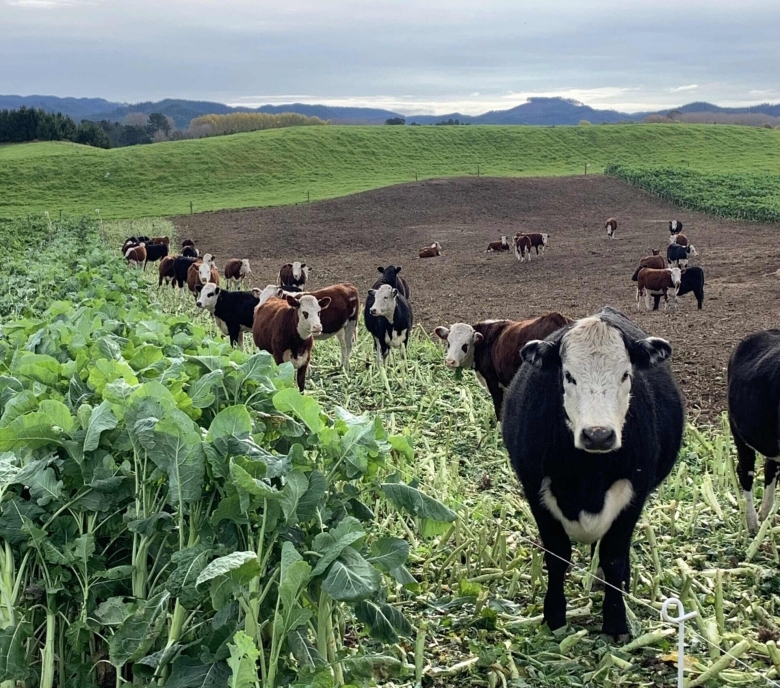
Winter crop paddock selection
Many physical, animal and staff welfare factors need to be considered when picking paddocks for winter brassicas. A specific wintering plan is now required for all winter crops, including an animal wellness plan.
The lay of the land
Land contour is a key factor. If the slope of the proposed fodder beet paddock is 10% or more, a resource consent may be required.
Critical sources areas (CSA) must also be evaluated. Where are potential overland water paths, low points and other CSAs in the proposed paddock? Can these be mitigated by planting other species, or restricting stock access?
Waterways
If crop is sown close to a waterway, consent may be required. Check current rules. Best practice is to create buffer areas to reduce potential sediment and nutrient runoff during grazing.
Sowing direction
Can the crop be drilled easily across slopes or parallel to CSAs or waterways to reduce run-off risk during grazing?
Soil type
Ideally crop paddocks will comprise soils less at risk of winter pugging. This reduces excess mud during grazing, and allows faster re-sowing after grazing, e.g. catch crops.
Shelter, water & space
Animals on crop become susceptible to stress in cold, wet, windy conditions. Access to good shelter is a must. Stock must also have access at all times to adequate supplies of clean fresh water, and have dry space for lying time (8 hours daily). Portable water troughs can help reduce paddock damage.
Plan for the worst
Always have an adverse weather plan. This could mean using a winter crop paddock that is set up for such conditions, or ear-marking other areas of the farm to move stock onto during adverse weather.
For more specific regional information, go to DairyNZ, Beef and Lamb, or your local Regional Council website. See also the section on winter grazing considerations, Transitioning animals onto fodder beet.