Make every bite count this season
Imagine having to eat a quarter of your body weight in leafy greens, every day, to maintain top physical performance.
That’s what grass-fed cows must do at peak lactation – chomp through about 120-130 kg of fresh pasture per day. What a workout!
Your cows are elite athletes, and just like their human equivalent, they rely on a support crew (us) to help them succeed. So how do we get behind them?
The maths is well documented – to produce two kg of milksolids per day, a typical crossbred cow needs to eat 210-220 megajoules of metabolisable energy, which equals about 18-19 kg dry matter with an average ME of 12.
At around 15 per cent dry matter, that becomes a massive pile of fresh pasture for them to harvest. We’re talking approximately 25,000 bites a day!
They can’t speed up those bites to cram more in, so it’s our job as pasture managers to make sure they maximise every bite.
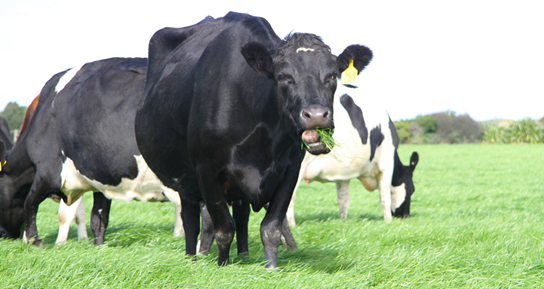
Big bites make their lives easier and more comfortable.
The cow is our customer
It’s easy to think about pasture management in terms of grazing rotations, average covers, feed wedges and growth rates.
But from the cow’s point of view, it’s all about bite size.
Everything we do to manage pasture is ultimately centred on making every bite as big as it can be.
That is our number one objective to make life easy and comfortable for our cows. It means less effort for them, and more time to rest and ruminate. Big bites improve farm profitability, and emissions intensity too.
Wouldn’t it be great if 2026 is the year you and your team turn pasture management from a chore to a shared crusade, so that exceptional results become embedded into your farm culture as something you all take pride in?
Glass half empty?
We like to regard ourselves as great pasture managers here in NZ. The truth is, we could be better.
It’s estimated that only about 50% of dairy farmers do a formal weekly monitor of pasture growth, yet it’s essential for effective management.
Data from the Emissions and Profitability study1 shows why better pasture management is worth striving for.
Described as game-changing by industry leaders, this project proves high profitability and lower emissions intensity go together.
Best performing farms in the study grew more feed, of higher feed quality, with more efficient use of nitrogen.
The key words here are ‘feed quality’, because (going back to the cow) quality drives bite size.
Break it down
On a daily basis, three fundamental rules drive exceptional pasture management.
- Rule 1 – graze to a consistent residual.
- Rule 2 – graze at the right length.
- Rule 3 – repeat rules 1 and 2.
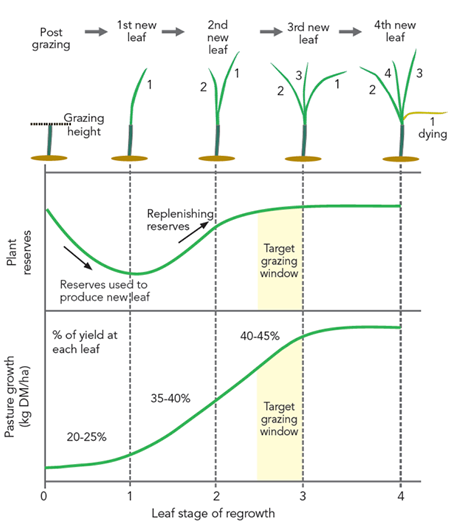
Rule 1 is the most important of all, because how cows leave a paddock after grazing determines the feed quality and thus bite size of that pasture when they next graze it.
Consistent post-grazing residuals are key, with 1500-1600 kg DM/ha widely accepted as ideal.
The only time to ignore Rule 1 is during wet weather, when protecting soils and pasture comes first. But when conditions improve, focus back on Rule 1.
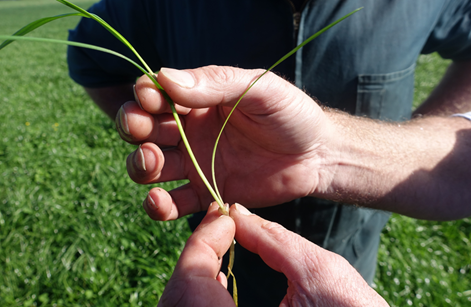
Rule 2 recognises the physiology of ryegrass growth. There is a sweet spot between too short and too long where you capture maximum yield and quality, which is 2.5 to 3 leaves per tiller.
The one exception occurs when high soil nitrogen levels cause canopy closure. Pasture falls over and starts dying at the base. Then you need to graze earlier.
Rule 3 reminds us this process is continual, and applies to every grazing, day after day, weather permitting.
- Top tip: If you aren’t already, use 24 hour grazing vs 12 hour. This does not affect milk production, but makes pasture management far easier, as you only have half as many decisions on paddock choice, and residuals.
Tools like mowing pre or post grazing and taking paddocks out of rotation to harvest supplement are always there to help if needed. But cows have repeatedly proved very capable of doing the job most of the time once these rules become a mantra for your whole team.
Take a walk
Implementing Rules 1, 2 and 3 each day is much easier if you know whether you have more pasture than last week, the same or less.
So if it’s been a while since you regularly walked the farm to measure pasture growth, it’s time to get back in the habit.
Use it as thinking and planning time. Make an appointment with yourself on the same day every week, and recognise the farm walk for what it is – a critical element of great pasture management.
Why? Because it’s the only way to get the information you need to make prompt, strategic decisions which support exceptional pasture management.
The farm walk alerts you to what’s coming. Typically, for example, farmers who regularly monitor pastures see a pending pasture surplus about two weeks’ earlier - a huge advantage in acting promptly to retain feed quality and cow bite size.
Without monitoring, pasture management becomes reactive, not proactive.
Seize the moment
Autumn is a great time for you and your team to review current pasture management practices, identify what could be improved, and set things up for better results in the year ahead.
It’s easier than you might think! Start with the basics. For example, does everyone on the farm agree on what a good, consistent post grazing residual looks like?
Get those phones out and take photos of grazed paddocks to compare notes and remind yourselves of the goal.
It’s never too late to start making positive changes. Your cows will appreciate it and thank you; you’ll finish this lactation well, and be ready to start the next one on the front foot. Barenbrug is always here to help – just contact us for more advice.
1Emissions and Profitability is a joint project between DairyNZ, Fonterra and LIC that used data from 8000 NZ farms to analyse the relationship between greenhouse gas emissions and farm profitability.